
chamber music
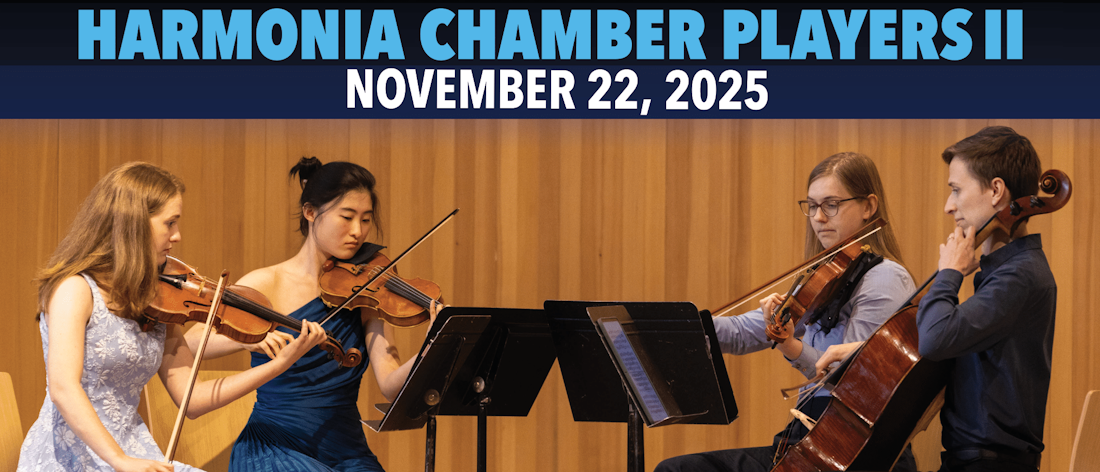
Saturday, November 22, 2025 • 2:00 p.m.
The Unitarian Church at 6556 35th Avenue NE
Karen Dunstan, soprano • Jennifer Chung, piano
Cassandra Willock, soprano • Anjali Chudasama, mezzo-soprano
Lyon Stewart, tenor • Gabriel Salmon, baritone
Stephen Provine, violin • Fritz Klein, violin
Katherine McWilliams, viola • Matthew Wyant, cello
Tickets will also be available at the door, beginning at 1:30 p.m.
Program
Aaron Keyt (*1964)
Eight Songs on Poems by Emily Dickinson [world premiere]
Carol Sams (*1945)
Six Songs of Carl Sandburg
Huntley Beyer (*1947)
String Quartet No. 2 (“Riddles”) [world premiere]
- complete concert program (PDF)
About the Concert
Three works by Seattle composers, including two world premieres!
Program Notes
Aaron Keyt
Eight Songs on Poems by Emily Dickinson
Keyt was born November 15, 1964, in Seattle. This set of songs for voice and piano, which receives its first performance this afternoon, was composed in 2020.
Aaron Keyt is a Pacific Northwest composer based in Seattle. He has written numerous works for voice, piano, organ, chamber ensembles, choir, orchestra and band. Since 2018 (William White’s first season as Harmonia’s music director), he has performed in the Harmonia Chorus as a member of the tenor section. In March of this year, Harmonia presented the world premiere of Keyt’s Nizina for two cellos and chorus, with a text by his spouse, Jennifer Chung (who, in addition to playing piano, also sings alto in the Harmonia Chorus).
Last year, Keyt (singing) and Chung (on piano) premiered the first seven of their Koi Songs for voice and piano, for which Keyt first wrote the music and Chung then wrote the words (in the manner of the Gershwins). The couple enjoy playing piano duets, and Keyt has so far written two sets of these pieces for them to play together at home (and for Chung to play with better pianists than Keyt in public).
Keyt began composing when he was nine years old, and four years later entered the composition program at the University of Washington School of Music, where he also studied trombone. He continued his composition studies in the graduate program at Princeton University. Also an active improviser, he is a founding member of Banned Rehearsal, a Seattle ensemble that has been making music since 1984.
“One of Harmonia’s activities during the COVID months of 2020 was online music trivia, hosted by Will White,” writes Keyt. “One result of those contests was a set of piano duets called Monsters, inspired by a Hallowe’en-themed question. The Dickinson songs also had their initial inspiration in one of Will’s trivia questions, the answer to which involved whole-tone scales, which feature prominently in the set. The chosen poems all involve animals or nature. In retrospect, the preference for these over any of Dickinson’s more introspective poems probably reflects the claustrophobia of the time. The choice of mostly humorous and happy texts was very definitely based on a desire to brighten the then-prevailing mood. The songs are dedicated to my first voice teacher, Rose Betz-Zall.”
Carol Sams
Six Poems of Carl Sandburg
Sams was born November 25, 1945, in Sacramento, California. She composed this work in January and February of 1989, dedicating it to George Shangrow, who conducted the George Shangrow Chorale in the premiere on May 22, 1989, at University Unitarian Church.
Carol Sams began composing when she was a young child, writing some four-part hymns at age six, “just from going to church and listening and taking piano lessons.” In high school she sang in the chorus and in 1959 became so entranced with the movie version of Porgy and Bess that she decided to write an opera of her own. (Another followed, although they were never performed.)
At Sacramento State College, where she went to study mathematics, Sams first became acquainted with music theory. “I fell in love with theory: all those things inside music that I knew existed had names all of a sudden. So after three years, convinced that math was not my field, I transferred to the University of California at Santa Barbara, got a degree in music, went up to Mills College in Oakland to study with Darius Milhaud, got another degree, came to the University of Washington because I thought it was a small school (which of course it wasn’t) and because I wanted to study with a particular teacher (who I found out wasn’t there any more because they had fired him), stayed anyway, and got another degree” (the first-ever doctorate in composition awarded to a woman by the UW).
Shortly after arriving in Seattle, Sams made the acquaintance of a young George Shangrow (founder of the group now known as Harmonia). She and her husband, Jerry, joined Shangrow’s nascent Seattle Chamber Singers, with whom they sang soprano and tenor solos, respectively, in dozens of Bach cantatas and other works over the ensuing decades. Along with Huntley Beyer and Robert Kechley, Carol Sams became part of a celebrated “triumvirate” of Seattle composers who would eventually write dozens of works premiered by the organization. (“They write music that people enjoy listening to — a hallmark in modern music,” Shangrow would wryly remark.) At first these were short choral works or pieces for chamber orchestra, but before long came symphonies, operas and large-scale oratorios — among them Sams’ magnificent The Earthmakers (1987), performed by Harmonia no fewer than four times.
Sams’ Sandburg songs date from 1989 and “were written for George and George’s group,” the George Shangrow Chorale, “and they did them very well,” she says today. Originally scored for a small choral ensemble (the George Shangrow Chorale was a 22-voice offshoot of the Seattle Chamber Singers that gave its first performance in January 1989), Sams recently reworked two of the six movements to be sung by the vocal quartet heard this afternoon (in the very same space where the work was premiered 36 years ago). “I also added some key signatures, although I don’t know if that will help or hurt!”
Each song “has a different emotional flavor,” says the composer. The opening number, “Prayers of Steel,” which has been performed separately, exudes “a strong sense of what the connection to God is. It has a sense of skyscrapers to it — made out of steel.” The next poem, “Maroon with Silver Frost,” has an “observational quality, with a sense of vulnerability in it.
“The preludes and fugues in ‘Phizzog’ represent an impetuous and teasing kind of thing that kids might say to each other,” while “Old Music for Quiet Hearts” is “my favorite of the bunch, because I tried to do some visual characterizations of leaves falling over a pond. It feels really close to me even still. After rehearsing the other ones” in preparation for today’s performance, “I feel pretty close to them, too, actually.”
Huntley Beyer
String Quartet No. 2 (“Riddles”)
William Huntley Beyer was born November 17, 1947, growing up in New Jersey; he currently resides in Redmond. His second string quartet receives its world premiere this afternoon.
Huntley Beyer met George Shangrow in 1969 in the classroom of harpsichordist Sylvia Kind at the University of Washington, where Beyer had come to pursue a graduate degree in composition. George played harpsichord and Huntley played both oboe and recorder. A friendship quickly developed and they began performing sonatas and trio sonatas together. Both enjoyed improvising, and would often crack each other up with “improvisational challenges” that involved ever-more-absurd levels of ornamentation.
Beyer began performing with Shangrow’s Seattle Chamber Singers not long after the group’s first official concert in June 1969, playing oboe and writing a cappella pieces for the ensemble. When George formed an orchestra — originally called the Broadway Chamber Symphony (named after the performance hall where they first gave concerts) and later known as the Broadway Symphony and then Orchestra Seattle — in 1979, Huntley became a founding member, playing oboe for about 15 years while continuing to perform chamber music with George.
Over the decades, Shangrow and his ensembles premiered numerous Beyer compositions, including three of his four symphonies, a flute concerto (Toot Sweet), the powerful St. Mark Passion and a song cycle (The Turns of a Girl), along with various choral-orchestral works: Songs of Illumination, Mass of Life and Death and Requiem for the Children. Members of Harmonia premiered his wind quintet in 2011, a piano trio in 2016, and a brass quintet in 2019. William White has conducted Harmonia in premieres of Beyer’s most recent choral-orchestral works: Circumference (2019) and World Out of Balance (2022).
Beyer’s String Quartet No. 1 (“Rusty Times”) was written for the now–world-famous Kronos Quartet, which gave some of its first performances on concerts presented by the Seattle Chamber Singers. (“George was music director at the University Unitarian Church and helped organize our first concert series as a group,” recalled Kronos founder David Harrington in 2010. “Kronos played [George Crumb’s] Black Angels for the first time … on this series.) Beyer also composed a short encore piece for Kronos, Enantiodromia High, recorded in 1979 (Fanfare called that album, released in 1982, “one of the finest string quartet discs ever issued”).
“I composed Riddles for the four fine string players performing today,” writes the composer of his newest composition, “whom I have known for a very long time, ever since my days as an oboist and composer in the Broadway Symphony and Orchestra Seattle. So first, a big thank you to such wonderful players and their willingness to play a new piece of mine.
“I call the piece Riddles because the movement content and titles suggest a putting-together of moods and ideas that might not typically go together, which is what music is all about, right? A unity of diversity. The title of the first movement, ‘Scat cats,’ might make no sense, until you decode ‘cats’ in the Bohemian sense, in which case cool cats doing a little jazz scatting makes perfect sense. Ask Jack Kerouac. This is also personal for me, because often in life, for example when simply strolling along, I’ll improvise a little nonsense-syllable scatting. This is very much like the main theme of the first movement. The slower themes, in contrast, are lyrical.
“The second movement, ‘Over easy,’ is how I like my eggs. But eggs are not a useful image for music, so imagine yourself just trundling on down and over a quiet road, in an easy way, a jaunty way, no hurry, nowhere to go, just being happy for no reason.
“The third movement, ‘Shadow waltz,’ combines the gentle, gracious sense of a waltz with a sense of yearning, or nostalgia. There’s a darker undertone to the lightness of the waltz. It’s a waltz with a shadow side.
“This contrast of light and dark carries into the last movement, ‘Laughing mischief,’ which features a bluesy grit that morphs into playful, fast figures, full of fun. So it’s a kind of bluesy scherzo.”