
mainstage series

Friday, May 8, 2026 • 8:00 p.m.
Benaroya Hall (200 University St)
Harmonia Orchestra & Chorus
William White, conductor
Wellspring Ensemble
Rose Beattie, mezzo-soprano
Program
Robert Kechley (*1952)
Fanfare
Lili Boulanger (1893–1918)
Psaume XXIV (“La terre appartient à l’Eternel”)
Lili Boulanger
Du fond de l’abîme
— intermission —
Gustav Holst (1874–1934)
The Planets, Op. 32
About the Concert
“This performance is guaranteed to be out of this world.” — The Stranger
Gustav Holst wrote The Planets between 1914 and 1918, reflecting the anger, desolation, joy and mystery of the Roman deistic pantheon. At precisely the same time, the young French composer Lili Boulanger explored the same gamut of emotions in her settings of the Psalms. Hearing these masterpieces back to back is a tantalizing musical experience not to be missed.
- The concert begins at 8:00 p.m. and will last approximately two hours, including one intermission.
- Doors to the Benaroya lobby will open at 7:00 p.m. and doors to the performance space will open at 7:30 p.m. Seating is not reserved.
- The Benaroya Hall box office will open two hours prior to the concert for in-person sales and will-call pickup. (The box office may be temporarily located closer to the lobby entrance, due to construction.)
Maestro’s Prelude
Dear Cosmic Voyagers,
Welcome to The Planets, an epic musical journey through the Solar System! Well, sort of. Classical-music–loving pedants love to point out that, actually, Gustav Holst set out to depict in The Planets not the spheres orbiting the sun, but rather the astrological signs corresponding to said spheres. Too often, this is painted as a win for astrology in its battle against astronomy, but I say: get you a symphonic suite that can do both.
Like all great works, the music of The Planets goes where its composer takes him, and while he may have started with mythology as his inspiration, Holst often winds up in some very cosmic places indeed. I don’t think it’s possible to listen to “Saturn” or (especially) “Neptune” without imagining yourself in a cold, distant corner of the Solar System devoid of atmosphere and gravity. And I don’t think it’s just because of the work’s title that John Williams’ took inspiration from “Mars” for his Star Wars music — it’s because it genuinely sounds how galactic battle music ought to sound!
At exactly the same time as Gustav Holst was working on The Planets in Britain, a much younger composer, Lili Boulanger, was creating a similarly novel sonic world across the channel. And as much as Holst is rightfully venerated for his craftsmanship and innovation, I think we have to look at Boulanger as something of a miracle child in the world of music.
I say “child” advisedly, because Boulanger barely lived into adulthood, dying in 1918 at the age of 24, making her achievement as a composer all the more miraculous. Naturally, she left quite a small body of work, but what she wrote during her short time on this planet is so arresting and original that it will take your breath away.
The first Boulanger piece on today’s program is about the Earth, allowing us to plug a gap in the Solar System left open by Holst. The second is about the depths of the human soul, and how a composer of 22 could bring forth so much feeling in their music shall remain a mystery to me for as long as I’m here to contemplate it.
I’m always very happy when Harmonia has the opportunity to take the stage at Benaroya Hall, and I wouldn’t want to come here without a piece composed especially for our musicians. In this case, it’s an opening fanfare by one of the founding members of our organization, Bob Kechley, and we’re so glad that you’re here to enjoy it tonight.
— Will White
P.S. Tonight’s concert is our season finale, but there’s one more event to come: our gala concert on Friday, May 29. I shouldn’t say too much, but these gala shows are getting more and more unhinged with each passing year, and if you want to see something that you literally will not see anywhere else, you’d be advised to get your tickets now.
Solo Artists
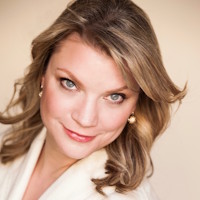
Mezzo-soprano Rose Beattie is known for her full expressive voice and dramatic stage presence, having been de- scribed as a “terrifically musical singer.” She has held long-standing roster positions with the Los Angeles Opera and Los Angeles Master Chorale, performing extensively with the Los Angeles Philharmonic at the Walt Disney Concert Hall and Hollywood Bowl. She has also participated in Seattle Opera’s Young Artist Program as an invited guest and performed abroad in Italy, Germany, Austria and England.
Ms. Beattie has sung with such notable conductors as Grant Gershon, Gustavo Dudamel, Esa-Pekka Salonen, Zubin Mehta, James Conlon, Plácido Domingo, Leonard Slatkin, Michael Tilson Thomas, Lorin Maazel, Rafael Frühbeck de Burgos, Bramwell Tovey, Charles Dutoit and Herbert Blomstedt. After calling Los Angeles her professional home for many years, Ms. Beattie recently returned to her childhood home in the Pacific Northwest. She is delighted to connect with the Northwest’s wonderful musicians, having enjoyed collaborating as a soloist in the Missoula Symphony’s Verdi Requiem, Northwest Symphony’s Dvořák Stabat Mater, St. Thomas Music Guild’s concert series, and Northwest Chamber Chorus’ Duruflé Requiem. Looking ahead, she will make her Wagnerian debut as a Valkyrie in Tacoma Opera’s Die Walküre.
Ms. Beattie has sung Hippolyta (A Midsummer Night’s Dream) with Seattle Opera’s Young Artists Program and Santuzza (Cavalleria rusticana) with Bellevue Opera, as well as Madame Flora (The Medium), Principessa (Suor Angelica) and Dorabella (Così fan tutte). On concert stages, her solo performances include Wagner’s Wesendonck-Lieder, Jake Heggie’s Statuesque and Berlioz’s Les Nuits d’été. Solos with the Los Angeles Master Chorale include Ricky Ian Gordon’s Grapes of Wrath and Handel’s Messiah.
learn more: rosevocalarts.com
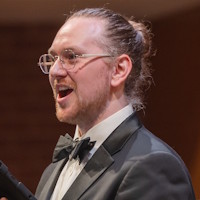
Tenor Charles Lyon Stewart hails from Washington, DC, where he began singing with the Washington National Cathedral Choir at age 9 and made his solo debut with the National Symphony in the annunciation scene of Handel’s Messiah at age 13. He holds a Bachelor of Music in vocal performance from Indiana University. Upcoming engagements include tenor soloist in Richard Einhorn’s Voices of Light with South Puget Sound Community College and the title role in Stravinsky’s Mavra with Puget Sound Concert Opera. He also holds a doctorate of nursing practice from the University of Washington and works as a psychiatric nurse practitioner.
Guest Artists
The Seattle-based choir Wellspring Ensemble strives to attain the highest level of choral art. In 2013, musical colleagues approached Evan Norberg to form a choir because of his deep commitment to creating great choral music. Beginning with a group of music majors, educators and musicians from Norberg’s long experience of singing throughout Western and Central Washington, Wellspring Ensemblehas stationed itself firmly in the Seattle choral scene. The multifaceted talents of its membership (which now include carpenters, lawyers, graphic designers and more) formed the building blocks Wellspring Ensemble needed to grow to more than the sum of its parts. A font of knowledge, a shared love for bringing excellence in choral music to life, and a familial connection to one another give Wellspring Ensemble a dynamic all its own.
learn more: www.wellspringensemble.org
An accomplished conductor, clinician and vocal educator, Evan Norberg has nearly two decades of experience shaping singers and ensembles in the Seattle area. He has maintained a private voice studio since 2006 and served on the faculty at Shoreline Community College since 2016. Trained in both classical and jazz, he has performed with and contributed to leading regional ensembles and remains an active member of the Seattle choral community, singing professionally with Evergreen Ensemble, Radiance, Byrd Ensemble and Tudor Choir. As a bass-baritone soloist, he has been featured in major choral works such as Handel’s Messiah, Fauré’s Requiem and René Clausen’s Memorial. Mr. Norberg holds degrees from Edmonds College and Central Washington University, and is currently pursuing his doctorate in Choral Conducting at the University of Washington
Program Notes
Robert Kechley
Fanfare
Robert Kechley was born in Seattle on June 1, 1952. This fanfare is extracted from the revised version of his Symphony No. 1, first performed by this orchestra under the direction of George Shangrow on May 2, 1992. The score calls for pairs of woodwinds (plus piccolo, English horn and contrabassoon), 4 horns, 3 trumpets, 3 trombones, tuba, timpani, percussion and strings.
The music of Robert Kechley is familiar to longtime Harmonia audiences through the numerous works by him that have been premiered by the organization over the past five decades. These vary from arrangements of folk songs and hymns, to major symphonic and choral works, including his delightful Symphony No. 2 (“Ferdinand the Bull”), a setting of Psalm 100 for organ, chorus and orchestra (first performed in September 2000 at Benaroya Hall), concertos for flute (2002) and trumpet (2004), Running Passages for 23 solo instruments (2006), and an 11-movement Folk Song Suite for chorus and orchestra (2009) — all under the direction of Harmonia founder George Shangrow. In 2011, his concerto for bassoon, chorus and orchestra received its premiere with soloist Judith Lawrence and conductor Alastair Willis, and in February 2023, William White led the world premiere of a Harmonia commission, Hard Times: Antiphonal Conversations for two harpsichords and chamber orchestra. Other ensembles that have commissioned and performed his music include the Northwest Chamber Orchestra, Seattle Bach Choir and Northwest Boychoir.
Robert Kechley grew up in Seattle and attended the University of Washington, where he studied harpsichord performance with Sylvia Kind and composition with Kenneth Benshoof, Robert Suderberg, William O. Smith and others. A member of the Seattle Chamber Singers from its earliest days, he not only sang in the chorus but played oboe and recorder, later playing harpsichord for the group’s annual Messiah performances (among countless other works).
The fanfare heard this evening had its genesis as a celebratory work conducted by George Shangrow at the Washington State Convention Center, which opened in June 1988. Kechley then incorporated it into the opening of a new finale for a revision of his Symphony No. 1, originally composed and premiered in 1984. The fanfare begins, in the words of the composer, “with a four-bar tune and a three-bar bridge. A set of variations follows, featuring different sections of the orchestra and finally putting them all together.”
learn more: www.robertkechley.com
Lili Boulanger
Psaume XXIV (“La terre appartient à l’Eternel”)
Marie-Juliette Olga (“Lili”) Boulanger was born August 21, 1893, in Paris, and died at Mézy-sur-Seine on March 15, 1918. She composed this setting of Psalm 24 in Rome during 1916, scoring the choral accompaniment for 4 horns, 3 trumpets, 4 trombones, tuba, timpani, harp and organ.
“During the course of her short but prominent career, Lili Boulanger was an icon of the entrance of women into French professional society in the early part of the 20th century,” wrote Mary Moran in a profile of the composer for Harmonia’s 2018–2019 survey of Boulanger’s music. “The Boulanger family was something like musical aristocracy in 19th-century Paris. Lili Boulanger’s grandfather taught at the famed Paris Conservatory, and her father Ernest was a well-known opera composer in his time, as well as a winner of the prestigious Prix de Rome for composition.
“Lili Boulanger and her older sister Nadia both studied composition at the Paris Conservatory, a rare and notable undertaking for women at the time. In their careers, both sisters struggled against the constraints of gender expectations of the era. Nadia competed unsuccessfully for the Prix de Rome several times, but favoritism and noted misogyny of the judges thwarted her efforts. Lili later won the competition in 1913, the first woman to do so in the category of music composition. During the month-long competition and in subsequent press coverage, she took pains to present herself in a specifically feminine and nonthreatening, even childlike, manner. This image, cultivated from the archetype of the femme fragile popular in art and literature of the time, would follow Boulanger through her short career, and be reinforced by music critics after her death in 1918 from complications of Crohn’s Disease.”
As a result of her winning the Prix de Rome in 1913, Lili Boulanger was awarded an extended stay at the Villa Medici in Rome (along with a monthly stipend), but illness cut short her initial trip to Italy. Health issues and her efforts in support of students from the Paris Conservatory fighting in World War I curtailed her composing efforts for a time, but during the first half of 1916 she was able to return to Rome, where she composed settings of Psalm 24 (heard this evening) and Psalm 129. She completed a treatment of Psalm 130 (Du fond de l’abîme — also on this evening’s program) the following year.
Boulanger began sketching Du fond de l’abîme as early as 1913, and she may have been contemplating her other psalm settings simultaneously (including several that were never realized). She apparently never heard Psaume XXIV performed during her lifetime. Published in 1924, details of its first performance remain elusive.
Dedicated to Jules Griset, an industrialist director of Choral Guillot de Saint-Brice, Psaume XXIV opens with fanfares that pre-echo the brilliant brass writing of Leoš Janáˇcek’s Sinfonietta (composed a decade later). The scoring for brass, organ and harp suggests, as Boulanger biographer Léonie Rosenstiel notes, “a consciously archaic and regal style,” as does the Gregorian chant–style writing for lower voices at the beginning of the work. The mood relaxes at the second verse, with a solo tenor singing the third.
“This is an assertive work,” Rosenstiel continues. “Both the instruments and the voices are quite aggressive in declaring God’s dominion over the Earth. The women’s voices appear to add both greater substance and a degree of word-painting to the composition, entering as they do for the first time on the words ‘Gates, lift up your heads, eternal gates.’ ” The closing pages return to the work’s opening material.
“Whereas the compositions written around the time of her Prix de Rome were impressionistic, characterized by polyharmonics, mixed sonorities, modal and whole-tone scales, and nature poetry,” writes Michael Alber, in Psaume XXIV “Boulanger developed a completely different and bold expressivity.”
Lili Boulanger
Psaume CXXX (“Du fond de l’abîme”)
Boulanger completed this work in 1917. Henri Büsser conducted the first performance in Paris on January 17, 1923. In addition to solo alto and chorus, the score calls for triple woodwinds (including piccolo, English horn, bass clarinet and contrabassoon), 4 horns, 3 trumpets, 4 trombones, tuba, timpani, percussion, 2 harps, organ, celesta and strings.
Lili Boulanger’s setting of Psalm 130 is her most ambitious choral-orchestral work, and the longest of her post–Prix de Rome compositions aside from the song cycle Clairières dans le ciel for tenor and piano. Her sketches reveal that the work was originally intended to be substantially shorter, but along the way she added orchestral episodes while repeating sections of text. Exactly when Boulanger began thinking about setting Psalm 130 remains unclear, but it likely predates her sketches for Psalms 24 and 129.
Boulanger dedicated Du fond de l’abîme (“Out of the depths”) to her father (“à la mémoire de mon cher Papa”), who had died when she was six. Psalm 130 is a prayer for the dead, leading Caroline Potter to theorize that the composer may have planned for it to be part of a Requiem mass, although others dispute this theory.
Reviewing a February 1923 performance of Du fond de l’abîme, composer Florent Schmitt (who had created a remarkable setting of Psalm 47 in 1904), wrote: “Coming from the mysteries of the abyss, a song rises slowly, the choirs staged parallel to the orchestra, whose music successively emerges little by little to reach the most desperate violence.”
The work opens quite literally in the depths of the orchestra, with tuba and cellos yielding to a rising contrabassoon motive that eventually passes upward through the orchestra. (Léonie Rosenstiel likens this passage to the opening bars of Ravel’s La valse and Concerto for the Left Hand, both composed years later). An impassioned dialogue between first and second violins leads to a dramatic dotted trumpet figure. All of this material will recur throughout the work.
After reaching a climax, the orchestra descends back into the depths, setting the stage for the initial choral entry, evoking plainsong chant and built on a half-step interval (“denoting fear”). “After the voices join into a contrapuntal texture,” writes Rosenstiel, “they regroup and end the section in aggressive homophony.” A brief orchestral interlude leads to a faster section in which altos and basses reprise the dotted trumpet motive.
An increasingly urgent instrumental passage featuring material from the opening leads to an impassioned choral- orchestral outburst that subsides as the soloist introduces a new melody (“Si tu prends garde aux péchés”). The pace quickens and builds once again as the chorus returns. Instrumental solos over harp arpeggios set the stage for another solo passage (“Mais la clémence est en toi”). The chorus returns briefly as the mood lightens somewhat and a solo tenor from the chorus joins the alto soloist (“Car en Iahvé est la miséricorde”).
Just at the point when listeners might suspect that Boulanger is heading toward an uplifting, hopeful conclusion, the mood plunges once again into despair with a return of the “out of the depths” motive, concluding (as the work began) in B♭ minor.
Gustav Holst
The Planets, Op. 32
Holst was born September 21, 1874, in Cheltenham, England, and died May 25, 1934, in London. He began composing this seven-movement orchestral suite in 1914, completing it in 1917. The work requires 4 flutes (2 doubling piccolo, one doubling alto flute), 3 oboes (one doubling bass oboe), English horn, 3 clarinets, bass clarinet, 3 bassoons, contrabassoon, 6 horns, 4 trumpets, 3 trombones, tenor tuba, tuba, 2 sets of timpani, percussion (bass drum, cymbals, glockenspiel, gong, orchestra bells, snare drum, tambourine, triangle, xylophone), organ, celesta, 2 harps, strings and — in the final movement — an offstage treble chorus.
Gustavus Theodore von Holst came from a three-generation family of musicians, so it was unsurprising that he would gravitate toward a career in music. As a child he studied piano and violin, but chronic neuritis led him to take up the trombone, which he played professionally for a time. He became fascinated withcomposing as a youngster and began conducting local choirs at age 17. In 1893, he enrolled at the Royal College of Music but failed to win a scholar- ship. His composition teacher, Charles Villiers Stanford, described him as “hardworking but not at all brilliant.”
Throughout his life, Holst took an interest in working with amateur musicians. While at the RCM, he conducted the Hammersmith Socialist Choir, where he met Isobel Harrison, whom he would marry in 1901. Two years later, he gave up playing the trombone for a marginally more lucrative job as a teacher, which permitted him to devote weekends and August school holidays to his first musical love, composition. In 1905, he joined the faculty of the St. Paul’s Girls School in Hammersmith, a position he would retain throughout the rest of his life. He also taught at Morley College for many years.
A revival of interest in English folk song sparked Holst to write two suites for “military band” and a St. Paul’s Suite for strings — pieces that remain firmly ensconced in the wind-band and string-orchestra repertoire to this day. Holst absorbed the folk-song idiom into his compositional palette — it makes its clearest mark on The Planets in the central episode of “Jupiter,” a tune that is so thoroughly English that he permitted its adaptation as a patriotic hymn (“I Vow to Thee, My Country”), and in 1925 his lifelong friend Ralph Vaughan Williams would include it in his hymnal Songs of Praise (under the name “Thaxted,” the English village where Holst lived for many years).
“As a rule, I only study things which suggest music to me,” Holst wrote in 1913. “That’s why I worried at Sanskrit. Then recently the character of each planet suggested lots to me, and I have been studying astrology.” Holst’s interest in Hindu philosophy dated from 1895, and he taught himself Sanskrit in order to compose works such as the opera Sita (unperformed during his lifetime), the Choral Hymns from the Rig Veda and The Cloud Messenger. A 1908 trip to Algeria inspired the orchestral suite Beni Mora, about which Vaughan Williams wrote: “If it had been played in Paris rather than London it would have given its composer a European reputation, and played in Italy would probably have caused a riot.” During a March 1913 excursion with composer Arnold Bax, Bax’s brother Clifford, and Balfour Gardiner (a champion of Holst’s music), Clifford Bax shared with Holst his interest in astrology.
The September prior, Arnold Schoenberg’s Five Pieces for Orchestra had premiered at one of Henry Wood’s Promenade concerts, and in January 1914 Schoenberg traveled to London to conduct a second performance — attended by Holst, who obtained a copy of the score. Later that year, Holst set about writing a work (with nearly identical instrumentation) he would call Seven Pieces for Large Orchestra, attaching to each movement a title related to the astrological character of one of the eight planets (omitting Earth).
Preoccupied with his “day job” teaching music at St. Paul’s, Holst composed his uncommissioned orchestral suite largely during weekends and holidays over a three-year period, occasionally interrupted by work on other projects. After completing A Dirge for Two Veterans in the spring of 1914, Holst began sketching “Mars, the Bringer of War,” completing it shortly before Britain’s declaration of war on Germany in August of that year. He composed the remaining movements in order, save “Mercury, the Winged Messenger,” which he wrote last, finishing it during early 1916. The orchestration took another year.
Due to his frail health, Holst could not serve in the military, but (after modifying his Germanic surname “von Holst”) he took a YMCA post organizing music at internment camps. Shortly before Holst departed England, Gardiner lavished upon his friend the gift of a private performance of The Planets at Queen’s Hall on September 29, 1918, led by Adrian Boult (after a mere one-hour rehearsal). Excerpts from the suite appeared on public concert programs over the next two years, to mixed reviews. When Holst’s 1917 The Hymn of Jesus debuted to widespread acclaim in March 1920, interest in a complete performance of The Planets surged, resulting in a November 15, 1920, London Symphony Orchestra concert directed by Albert Coates — after which most critics revised their assessment of the work. The Planets would become Holst’s signature composition, overshadowing all of the music he produced during his remaining 14 years.
Rather than tone poems in the Richard Strauss mold that depict specific action, each movement of The Planets is a character study of the astrological entity in question, based in part on descriptions from Alan Leo’s book What Is a Horoscope and How Is It Cast? And while Schoenberg’s Five Pieces likely provided an overall template, early reviewers and later writers detected influences from many other composers.
Boult later reported that Holst sought to convey “the stupidity of war” with the insistent 5/4 ostinato rhythms of “Mars”; according to Kenric Taylor, its “blatant dissonance and unconventional meter seems to be riddled with the influence of Stravinsky” (whose The Rite of Spring debuted in London in 1913). In “Venus,” David Trippett detects hints of Vaughan Williams’ Sea Symphony, Stravinsky’s Firebird and “a celesta passage from the second of Schoenberg’s Five Pieces,” while Holst derived the opening from one of his own (abandoned) vocal works, A Vigil of Pentecost.
In “Mercury,” Holst uses bitonality, shifting accents and three-against-four rhythmic patterns to suggest the winged messenger scurrying about, techniques he had employed in his 1915 Japanese Suite. To one reviewer, the opening of “Jupiter” brought to mind Rimsky-Korsakov (who in turn influenced Stravinsky’s Firebird and Petrushka), but the inspiration for the majestic central episode is clearly “Nimrod” from Edward Elgar’s Enigma Variations.
For “Saturn,” Holst drew on material from Dirge and Hymeneal, his 1915 composition for female chorus and piano. “Uranus,” which opens with a broadly stated four-note motive that pervades the movement, recalls Paul Dukas’ The Sorcerer’s Apprentice. The use of a wordless chorus of sopranos and altos in “Neptune” may derive from Claude Debussy’s “Sirènes” (from Nocturnes), but the use of shifting orchestral colors in place of a clearly definable melody echoes the third of Schoenberg’s Five Pieces (“Farben,” or “Colors”).
— Jeff Eldridge